Rhinoplasty: What to Expect Before and After a ‘Nose Job’
Posted on 18 Sep, 2026By Dr. Muddappa Aesthetic Health Writers
Dr. Muddappa's Plastic Surgery Team is a group of cosmetic and reconstructive surgery specialists who share expert knowledge on aesthetic procedures and patient care. They write simple, informative articles on plastic surgery options, recovery tips, and what patients can expect before and after their procedures. The team's goal is to help patients make informed choices about their appearance and feel their best, both inside and out.

Rhinoplasty, or a nose job, is a surgical procedure that changes the shape, size, or structure of the nose. Some people opt for rhinoplasty to address aesthetic concerns, while others undergo the procedure to resolve breathing issues or correct structural problems. Knowing what to expect before and after surgery can help you prepare for the recovery period and set realistic expectations for the outcome.
If you are looking into rhinoplasty before and after results, just remember that pictures can demonstrate how a nose can change, but they can't predict what your nose will look like after surgery.
What to know about rhinoplasty?
There are various ways in which rhinoplasty can change the nose, such as the bridge, tip, nostrils, width, or overall proportions. The procedure can also be used to correct structural problems that are impacting nasal airflow.
The procedure may be purely cosmetic, functional, or a combination of the two. If breathing is an issue, the surgeon must also consider the internal working of the nose in addition to modifying the external structure. In some instances, rhinoplasty may be combined with septoplasty to address both aesthetic and breathing concerns.
The objective of the surgeon isn't necessarily to create a completely new nose, but instead to strive for balance in the facial structure, while preserving or enhancing nasal function.
What to discuss during your Rhinoplasty consultation?
It's important to have a thorough consultation regarding your rhinoplasty. During the meeting, your surgeon can go over your medical history, current medications, previous nasal injuries or surgeries, breathing concerns, and your expectations from the procedure.
Your nasal structure can also be examined, including the internal structure. Photographs can be taken for surgical planning and to assess changes.
This is also a good opportunity to ask what you’d like to change. You may be concerned with a nasal hump. wide nose, dropping or bulbous tips, symmetry, or difficulty breathing. Discuss each of your concerns instead of focusing on the appearance only.
According to the American Society of Plastic Surgeons (ASPS), appropriate candidates generally need to have completed facial growth, be in suitable overall health, and have realistic expectations about what surgery can do. It emphasises discussing medical history, expectations, risks, and breathing concerns with the surgeon before proceeding.
What you should ask your surgeon
Before setting an appointment for surgery, you may want to ask:
- What changes are realistically possible for your nose?
- Will the procedure affect my breathing?
- What approach will you use?
- How long should you expect swelling to last?
- When can you return to work and exercise?
- What complications should i watch out for?
- What type of follow-up care will you need?
- Can you see appropriate before and after photographs of previous patients?
A good consultation should equip you well with an understanding of the proposed procedure, what to expect during the recovery process, and any limitations of surgery.
How to prepare for Rhinoplasty?
Preparation for rhinoplasty typically begins several weeks or days before surgery, depending on your specific circumstances. Your surgeon may also request lab tests or other medical evaluations.
Make sure to give a complete list of prescription medicines, over-the-counter medicines, vitamins, and supplements you take. Certain medications and supplements can promote bleeding, so your surgeon may ask you to stop taking them. Do not discontinue prescribed medication without medical guidance.
Smoking can affect the healing process, so your surgeon may suggest stopping smoking before and after surgery. It's also a good idea to plan your recovery. Set up transportation home after surgery and, if recommended by your surgeon, have someone to stay with you during the initial healing phase.
Make preparations for the recovery room at home and keep essential medicines, water, and easily accessible food nearby. Following your surgeon's individual instructions is more important than following general recovery guides.
What happens during the rhinoplasty procedure?
Rhinoplasty is generally carried out using an open or closed approach. The choice depends on the patient's anatomy, required changes, and the surgeon's treatment plan.
In the closed approach, incisions are made inside the nostrils, while in an open approach, an additional incision is made across the columella, the soft tissue connecting the nostrils.
During surgery, the surgeon reshapes, removes, rearranges, or adds cartilage and bone to achieve the desired nasal structure. If a deviated septum is contributing to breathing problems, it can also be corrected as part of the procedure.
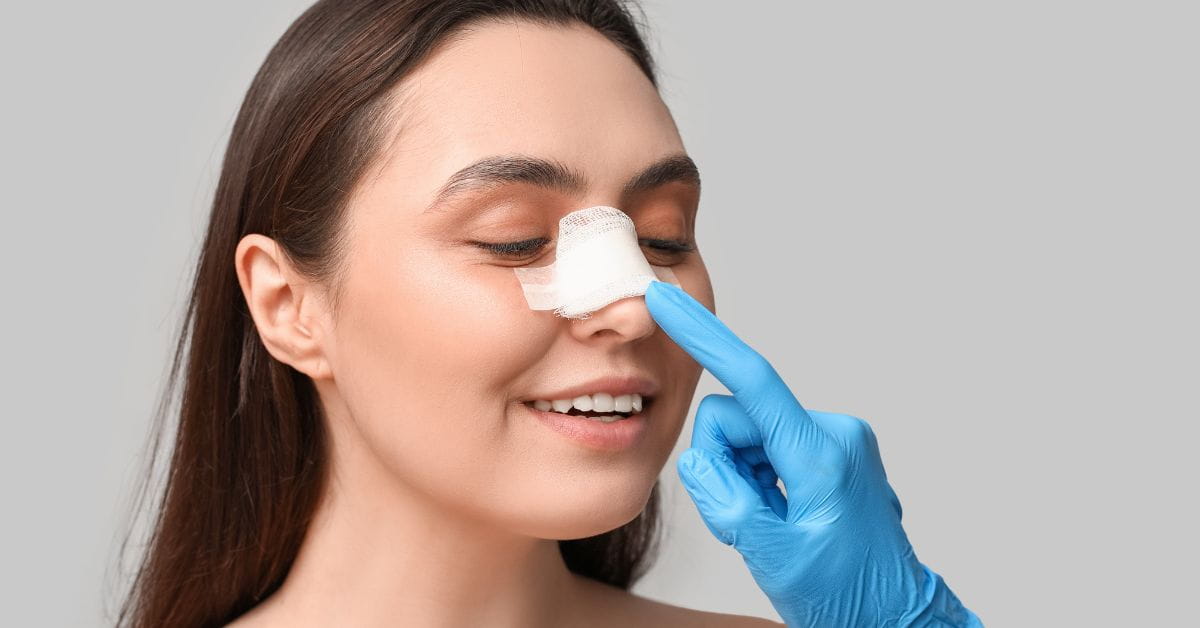
The skin and tissues are then repositioned, and the incisions are closed. A splint may be placed over the nose to offer support during early healing. The duration and technique of surgery depend on the complexity of the procedure and required changes.
Rhinoplasty recovery: What to expect after surgery?
The first few days after surgery are generally spent resting and safeguarding the nose while managing discomfort and swelling. You may also need to wear a splint, dressing, or packing depending on the procedure.
Discomfort after surgery may vary between mild, moderate, or severe, but your surgeon can prescribe or recommend appropriate medication. Make sure to follow the dosage and instructions given by your healthcare team.
You may need to sleep with your head elevated and avoid putting pressure on your nose. Activities that can result in impact to the face should be avoided during the initial healing period.
Many people can return to work or school in about one or two weeks, although the timeline depends on the procedure and individual healing. Strenuous exercise and heavy lifting generally need to be avoided for longer.
- Swelling after Rhinoplasty:
One of the biggest aspects of the early recovery period is swelling. Your nose may initially appear bigger than expected, and bruising can develop around the nose and eyes. This is especially important when reviewing rhinoplasty before-and-after photographs. An early postoperative photograph may not demonstrate the final result because the nose continues to change as the swelling decreases.
Swelling can remain noticeable for several weeks and gradually decreases over the following months. Most of the swelling may have decreased by about three months, but there may also be a few residual swellings that remain, and the nasal contour can continue to refine for up to a year.
It's also possible for swelling to appear uneven during the first few weeks of healing. One side of the nose may look more swollen than the other, and this can change as the healing process progresses.
Your surgeon may also suggest keeping your head elevated, avoiding pressure on the nose, limiting strenuous activity, and protecting the surgical site from injury.
- Breathing concerns after rhinoplasty:
Nasal breathing can feel different directly after surgery because of swelling, congestion, packing, or internal healing. Swelling that is temporary, however, should not be interpreted as a permanent breathing outcome.
Nevertheless, breathing should be an important component of the surgical plan. If you already have breathing issues, let your surgeon know before surgery. Structural problems such as a deviated septum may need to be addressed.
Rhinoplasty should be planned with both appearance and functionality in mind when breathing is a concern. If breathing becomes persistently difficult after surgery, you should consult with your medical provider instead of ignoring the issue.
What to know about Rhinoplasty risks?
As with any procedure, there are also risks associated with rhinoplasty. These include infection, bleeding, changes in skin sensation, scarring, poor wound healing, persistent swelling, an unsatisfactory appearance, and difficulty breathing.
While rare, some patients may also experience a perforation of the nasal septum. Revision rhinoplasty may be required if the desired outcome is not achieved or a functional/structural problem develops.
Understanding these risks doesn't necessarily mean they will occur, but the purpose of understanding them before surgery is to help you make an informed decision and understand the importance of postoperative monitoring.
Contact your healthcare provider immediately if you are experiencing severe or worsening pain, uncontrolled bleeding, signs of infection, significant breathing difficulty, or other concerning symptoms.
Rhinoplasty Before and after: Understanding the final result
One of the biggest misconceptions about rhinoplasty is that appearance can be judged right away after surgery. The nose requires considerable time to heal.
You can notice an initial change when the splint is removed, but swelling can make the nose appear larger, less defined, or different from the planned result. The tip of the nose often takes longer to settle than other areas.
When reviewing rhinoplasty before and after photographs, look at photographs that have healed enough to determine the final result. Your surgeon may also show you photographs of previous patients with similar nasal characteristics to help you understand the range of possible outcomes.
The final result generally develops as the swelling decreases and the nasal tissues settle. While rhinoplasty produces long-term structural changes, natural ageing can still affect the appearance of the nose over time.
Final Thoughts
Understanding rhinoplasty before and after results can help you prepare for the procedure and recovery with realistic expectations. Since healing varies from person to person, the final appearance may take time to develop. Consult a qualified surgeon, Dr Muddappa P.P., to discuss your goals, concerns, risks, and expected outcomes before making a decision.
FAQS:
1. How long does swelling last after rhinoplasty?
Noticeable swelling generally improves during the first several weeks and gradually decreases over the following months.
2. When can you see the final rhinoplasty result?
You will be able to see some initial changes right after the splint is removed, but this is not the complete result. It takes a year for the swelling to subside, so it will take that long to see the final shape of your nose.
3. Can rhinoplasty improve breathing?
In some cases, nasal breathing can be improved in those experiencing difficulties with their breathing pattern. Structural irregularities in the nasal septum need to be corrected. If you are having problems with your breathing, make sure to mention it to your surgeon prior to your rhinoplasty.
4. Is rhinoplasty painful?
It is important to expect some level of discomfort while following the procedure, but depending on the method and complexity, it can vary from person to person. Make sure to talk with your physician about the pain relief methods. Severe pain should not be a common occurrence and should be mentioned to your doctor.
5. Can rhinoplasty results change over time?
The majority of the rhinoplasty healing process occurs within the first year following the procedure. However, the nose contour will change over time due to natural ageing and subtle shifts in bone structure.


